Monday, May 10, 2010

Wednesday, April 28, 2010
My Thesis Proposal
For those interested in what I am going to be studying for the next year, here is my now approved Thesis proposal

A Theological Exploration of Forgiveness, Judgement and the Wrath of God
Nathan McCorkindale
Introduction/Rationale
We live in a world that likes the idea of peace and love, but is unwilling to seriously look at the issues that cause people to be alienated from each other. Perhaps one of the greatest causes of alienation in our society today is a lack of forgiveness. This lack of forgiveness is just as evident within the church as it is in the broader society. Forgiveness is a necessary action if any community or society is to live together. For people both in and out of the church, there is a growing assumption that to forgive someone is to let them go, free of consequences, and to forget the wrong that was done. These ideas are what drive the popular saying, “Forgive and forget.” However, is this really what forgiveness is? How can we “forgive and forget” when something truly terrible has happened to us? And is this what God has actually done with our wrongdoings? If so, how can God be a God of justice?
On the opposite side of this spectrum is the idea that, before I can forgive, you must pay for your wrongdoing. Popular culture shows us this picture in sitcoms where the wife will not talk to her husband until proper penance has been paid. In this case, forgiveness has a retributive cost. The husband is forced to discover the right action or word that will release him from the hold of his wife. While on television, this is played up for laughs, but when this actually happens in marriages the results are anything but funny. Rather than forgiveness and reconciliation between the married couple, bitterness and resentment grow. Sadly, this sort of thinking about forgiveness has seeped its way into our theology of the cross. In a current popular sermon, a preacher has God saying to sinners,
"Do you know what your forgiveness cost me? Don’t you know God the Father beat me to pieces? He obliterated me beyond recognition, He took the cup of wrath that had your name on it and splashed it onto my perfectly sinless and bleeding face and what it is worse is that God did this to me with a smile. It pleased Him to crush me for you, that is what your forgiveness cost me."
Does God’s forgiveness really mean that God’s wrath must violently be poured out on Christ this way? If God is all-powerful, why does God not choose to simply forgive? How do we understand God’s wrath in relation to God’s forgiveness?
Growing up as a child in the church, I was often confronted with a dual vision of God. The first was of Jesus dressed in white holding a lamb. The other was of the terrifying God of the Old Testament who brought wrath and judgment on sinners. However, the trouble with these images is that it pits two gods against each other, rather than being sufficiently Trinitarian. The Biblical story of God’s forgiveness is not one of simply letting sinners off the hook for their wrongdoing. The Biblical story of forgiveness is a powerful one because our forgiveness was not cheap. The trouble is that, for many in Christian circles, the cost of forgiveness has become associated with retribution or punitive justice. This understanding of punitive justice is one that stands in contradiction to the worldview in which the Bible was written. The Biblical authors wrote of God’s forgiveness, justice, and wrath from a Hebraic judicial model.
Recently, in one of my seminary classes, there was another student who would often make comments about how we need to take God’s wrath, or anger, or judgment seriously. I often wondered what he meant by this. Later in the semester, I began to read Miroslav Volf and his understanding of forgiveness. I have also read bits and pieces of L. Gregory Jones and Chris Marshall. All of these men have been influencing my thinking about forgiveness and justice. I am interested in bringing these men into conversation with what the Scriptures teach us about forgiveness, wrath and justice of God.
It is my thesis that embracing a relational Hebraic sense of justice and a biblical understanding of forgiveness will challenge common punitive notions of wrath and justice with the resulting discovery that God’s wrath is restorative and not punitive.
Methodology The majority of my research will be library research. I will read widely on issues of forgiveness, atonement, and wrath. I will also be taking a class on the Theological Understandings of Jesus.
 This paper will start with a definition of what Hebraic relational justice is and how it is different from our current Western judicial lens. I will then look at both the Old and the New Testaments in places where our understanding of God’s forgiveness, justice and wrath may have been misinterpreted because of the lenses we were using. Finally, I will try and formulate a better understanding of God’s forgiveness, justice, and wrath.
Expected Conclusions I expect to find our previous notions of God’s wrath to be challenged by a theological understanding of forgiveness. We will find that forgiveness does not soften the challenge of God’s wrath, but will help us see that God’s restorative initiative is to bring forgiveness to the world. I also expect to find that, as we think about God’s forgiveness and wrath, we may find that the restorative justice movement in our society today can help us better understand God’s forgiveness and justice.

A Theological Exploration of Forgiveness, Judgement and the Wrath of God
Nathan McCorkindale
Introduction/Rationale
We live in a world that likes the idea of peace and love, but is unwilling to seriously look at the issues that cause people to be alienated from each other. Perhaps one of the greatest causes of alienation in our society today is a lack of forgiveness. This lack of forgiveness is just as evident within the church as it is in the broader society. Forgiveness is a necessary action if any community or society is to live together. For people both in and out of the church, there is a growing assumption that to forgive someone is to let them go, free of consequences, and to forget the wrong that was done. These ideas are what drive the popular saying, “Forgive and forget.” However, is this really what forgiveness is? How can we “forgive and forget” when something truly terrible has happened to us? And is this what God has actually done with our wrongdoings? If so, how can God be a God of justice?
On the opposite side of this spectrum is the idea that, before I can forgive, you must pay for your wrongdoing. Popular culture shows us this picture in sitcoms where the wife will not talk to her husband until proper penance has been paid. In this case, forgiveness has a retributive cost. The husband is forced to discover the right action or word that will release him from the hold of his wife. While on television, this is played up for laughs, but when this actually happens in marriages the results are anything but funny. Rather than forgiveness and reconciliation between the married couple, bitterness and resentment grow. Sadly, this sort of thinking about forgiveness has seeped its way into our theology of the cross. In a current popular sermon, a preacher has God saying to sinners,
"Do you know what your forgiveness cost me? Don’t you know God the Father beat me to pieces? He obliterated me beyond recognition, He took the cup of wrath that had your name on it and splashed it onto my perfectly sinless and bleeding face and what it is worse is that God did this to me with a smile. It pleased Him to crush me for you, that is what your forgiveness cost me."
Does God’s forgiveness really mean that God’s wrath must violently be poured out on Christ this way? If God is all-powerful, why does God not choose to simply forgive? How do we understand God’s wrath in relation to God’s forgiveness?
Growing up as a child in the church, I was often confronted with a dual vision of God. The first was of Jesus dressed in white holding a lamb. The other was of the terrifying God of the Old Testament who brought wrath and judgment on sinners. However, the trouble with these images is that it pits two gods against each other, rather than being sufficiently Trinitarian. The Biblical story of God’s forgiveness is not one of simply letting sinners off the hook for their wrongdoing. The Biblical story of forgiveness is a powerful one because our forgiveness was not cheap. The trouble is that, for many in Christian circles, the cost of forgiveness has become associated with retribution or punitive justice. This understanding of punitive justice is one that stands in contradiction to the worldview in which the Bible was written. The Biblical authors wrote of God’s forgiveness, justice, and wrath from a Hebraic judicial model.
Recently, in one of my seminary classes, there was another student who would often make comments about how we need to take God’s wrath, or anger, or judgment seriously. I often wondered what he meant by this. Later in the semester, I began to read Miroslav Volf and his understanding of forgiveness. I have also read bits and pieces of L. Gregory Jones and Chris Marshall. All of these men have been influencing my thinking about forgiveness and justice. I am interested in bringing these men into conversation with what the Scriptures teach us about forgiveness, wrath and justice of God.
It is my thesis that embracing a relational Hebraic sense of justice and a biblical understanding of forgiveness will challenge common punitive notions of wrath and justice with the resulting discovery that God’s wrath is restorative and not punitive.
Methodology The majority of my research will be library research. I will read widely on issues of forgiveness, atonement, and wrath. I will also be taking a class on the Theological Understandings of Jesus.

Expected Conclusions I expect to find our previous notions of God’s wrath to be challenged by a theological understanding of forgiveness. We will find that forgiveness does not soften the challenge of God’s wrath, but will help us see that God’s restorative initiative is to bring forgiveness to the world. I also expect to find that, as we think about God’s forgiveness and wrath, we may find that the restorative justice movement in our society today can help us better understand God’s forgiveness and justice.
Monday, April 26, 2010
More on Heresy

Here is a little quote from Donald Miller's blog. I thought it was pretty interesting and relates a bit to some of the other things I have said recently here. Just some more food for thought.
"We commonly believe that the Evil One wants us to teach bad theology, and I suppose he does. But what he wants to do more is to have us teach right theology in a way that devalues human beings, insults and belittles them, and so sets them against the loving message of God.
So if we teach right theology in a way that is condescending, we are just as guilty as being heretics. That’s why the Bible spends as much or more time talking about love as it does about doctrine. My guess is we love doctrine because it makes us feel superior, but neglect love because it calls for personal sacrifice and vulnerability." - Donald Miller (read the rest here)
Saturday, April 17, 2010
The Rewards of Simplicity - Book Review

I was given a free copy of this book by Bethany Publishing House for reviewing purposes.
Wednesday, April 14, 2010
Perhaps a Model?
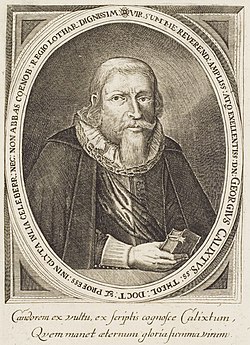
In the 1600s there was a man named Georg Calixtus. He was a man who believed that Luther's interpretation of scripture was the best. This was his theological stream. But he was also uncomfortable with the rigid dogmatism and rigidity that was surrounding the Lutheran scholastic world at the time. Here is a little bit of what he thought.
 "Everything that is in Scripture has been revealed by God, and ought to be believed; but not all is of equal importance. Only that which relates to salvation is fundamental and absolutely necessary. The rest is equally true, and is also important, for otherwise God would not have revealed it. But it is not essential for being a Christian. There is a difference between heresy and error. The former is the denial of something that is essential for salvation. The latter is a denial of another element of revelation. Both heresy and error are evil, and should be avoided. But only heresy is of such gravity as to keep Chrsitian from communion with each other... (There is more about how to tell what is essential for salvation and an example of Justification by Faith as something which is Biblical but not essential for salvation) Therefore, although it is important (Justification by Faith), it is not to be required by all, as if any who reject it were heretics. Luther was right in affirming this doctrine, and Lutherans are also right in insisting on its truth. But this does not mean that Catholics are heretics. And the same can be said regarding the differences between Lutherans and Calvinists on the manner of the presence of Christ in communion. Although Calvinists are in error, they are not heretics."
(Gonzalez, Justo L. The Story of Christianity Vol 2. NY: HarperCollins Publishers, 1985) p. 177-178
I like this idea. Though it does need to be said that originally Calixtus accused of being a syncretist (which doesn't really makes sense since that wasn't what he was doing but....) All of this is to say after my last post, I think that we need more people who are like Calixtus. Who are willing to have strong theological convictions, who believe that they are right, but also very concerned that Christians stay in communion with each other. Even Christians who really really disagree with each other (Like Luther and the Catholics)
(Gonzalez, Justo L. The Story of Christianity Vol 2. NY: HarperCollins Publishers, 1985) p. 177-178
I like this idea. Though it does need to be said that originally Calixtus accused of being a syncretist (which doesn't really makes sense since that wasn't what he was doing but....) All of this is to say after my last post, I think that we need more people who are like Calixtus. Who are willing to have strong theological convictions, who believe that they are right, but also very concerned that Christians stay in communion with each other. Even Christians who really really disagree with each other (Like Luther and the Catholics)
Tuesday, April 13, 2010
A Plea

Monday, April 12, 2010
Different Eyes: The Art of Living Beautifully (another book review)
 Different Eyes by Steve Chalke and Alan Mann is an awesome must read for anyone who is interested in Christian ethics. Rather than write a book which argues a position on an ethical topic and tries to convince the reader that this is what they should believe, Chalke and Mann write in a way that should inspire the reader to try and live differently in the world, or as they say live beautifully. There are no answers on what is right in this book. There are however, many suggestions on how the Christian life is to be lived, which should help you make the "big" ethical decisions.
The book is made up of four parts. The first two sections work on explaining what it means to live beautifully in the world and laying out the foundation for us in what God has done and how God has worked in the world. At the end of each part there are two letters written by people on opposing sides of an ethical issue with some discussion questions at the end. Chalke and Mann never come out and take a clear position on any issue (although I think that for most of them you can guess what they think). This may be frustrating for some readers, but I found it refreshing. This would be a great book for discussing in small groups, Sunday school, or with some friends in a coffee shop.
Part way through reading the book I had to stop and find our what theological stream these guys were writing from, I honestly thought that they might be Anabaptists, *sigh* this is not the case, but there are certainly some similarities to be found.
If you are looking for a scholarly work on Christian ethics, this is not the book for you. However, if you are looking for something that is short, easy to read, and a great way to start thinking about ethics than this book is a must read.
If you are interested just click HERE for a sample chapter.
(A free copy was given to me by Zondervan for the purpose of reviewing. I was under no obligation to write a positive review... The book just kicked butt)
Saturday, April 10, 2010
New Kicks
It was time for new shoes. I have had my last pair for a long time now. They were old, and getting pretty disgusting, and they were starting to fall apart. So last night Niki and I were walking around Riverpark and I found myself a sweet new pair of kicks. Best of all they were 50% off so I only paid 20 bucks for them. Here are some before and after shots.


Friday, April 09, 2010
Dreams... not the good kind

Thursday, April 01, 2010
Gonna Be A Daddy
Nope this isn't April Fools, though the day of announcement is intentional because it makes me laugh :)
But I am going to be a dad! For the whole story check it out on Niki's Blog HERE

But I am going to be a dad! For the whole story check it out on Niki's Blog HERE

Wednesday, March 17, 2010
St. Patrick

Fact: St. Patrick was not the first Bishop of Ireland.
Fact: St. Patrick did not lead all the snakes out if Ireland.
Now, if you are all worried that all the things you love about St. Patrick are just a bunch of myths then I encourage you to pick up St. Patrick by Jonathan Rogers.
It is a great book which looks at both some of the myths and the facts of the life of this great Saint. I know that this is a pretty silly thing to mention in a review, but I loved the quality of this book. It felt wonderful in my hands, and it looks great.
It is a small book, only 102 pages plus the appendixes, but packed with information. One of the great things is the appendixes at the back which include all the actual writings of St. Patrick, so after you read what Rogers says about St. Patrick you can actually go and read his Confession and his letter.
This book is an excellent primer on the life of St. Patrick, and the beginning of Celtic Christianity in Ireland. I highly recommend picking up this book and reading it next St. Paddy’s day.
Disclosure of Material Connection: I received this book free from Thomas Nelson Publishers as part of their BookSneeze.com <http://BookSneeze.com> book review bloggers program. I was not required to write a positive review. The opinions I have expressed are my own. I am disclosing this in accordance with the Federal Trade Commission’s 16 CFR, Part 255 <http://www.access.gpo.gov/nara/cfr/waisidx_03/16cfr255_03.html> : “Guides Concerning the Use of Endorsements and Testimonials in Advertising.”
Monday, March 08, 2010
A Multi-Site Church Road Trip
 I just finished reading A Multi-Site Church Road Trip by Geoff Surratt, Greg Ligon, and Warren Bird.
In this book they look at a number of different churches who are functioning as Multi-Site churches. In many ways it reminded me of the book Treasure in Clay Jars, by Lois Barrett. It gives a new look at different ways that churches around North America are functioning and dreaming about what it means to fulfill the great commission.
As someone who is new to the whole, multi-site movement this was a good book to get a feel for some of the benefits and hindrances of starting up your own multi-site church. They seem to offer some really good insights for any leadership team who is considering this proposal.
It is also a book that made me think a bit more about this issue. There are a number of really great positives that I see for this model. It can lower costs, it would certainly be cheaper than building a new mega church. It can also create close tight communities while at the same time having the resources a huge church. While a church of 200 may not be able to sustain a full time missionary by itself, 1 church with 10 sites of 200 people could. It also allows for pastors to be a little more specialized. Instead of having to be a preacher, counselor, and administrator, you only need to be one or two of those.
This specialization of pastoral work can be troubling as well. Does this model bring about a cult of personality? What happens when the teaching pastor decides to move on? At the end of this book there is a chapter that tries to deal with some of the criticisms that multi-site churches face.
However, they did not answer one of my biggest concerns, and that is, how does technology change the message that is being sent? The very mode that we receive our message through, shapes the message. There seems to be great rush to move churches into multi-site, because of the seen benefits of this technology, but what are the downsides, and who is talking about that? And I have to say I totally disagree with any one who thinks internet campus‘ are a good idea. I didn’t think that Mark Driscoll and I would have much in common, but on this one we are definitely together. My biggest problem with them is that it is an individualistic experience, and I firmly believe that the church isn’t at all about my experience. I believe that internet campuses are a prime example of churches foolishly rushing into a technology that will shape the church, without fully weighing the costs and damages.
All in all it is pretty good book, worth picking up if you are interesting in starting a multi-site church or just interested in knowing more about it.
Saturday, March 06, 2010
Biblical Interpretation (Don't worry it's funny)
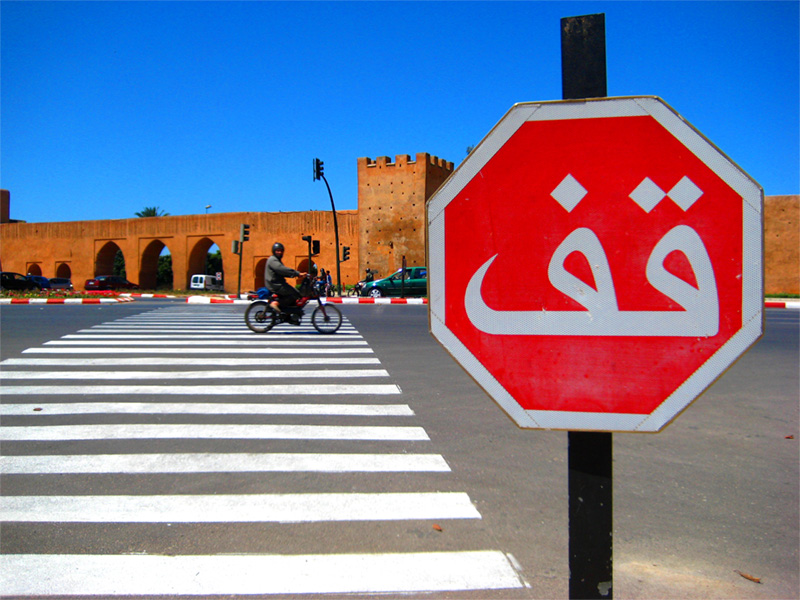
Suppose you're traveling to work and you see a stop sign. What do you do? That depends on how you exegete the stop sign.
1. A postmodernist deconstructs the sign (knocks it over with his car), ending forever the tyranny of the north-south traffic over the east-west traffic.
2. Similarly, a Marxist sees a stop sign as an instrument of class conflict. He concludes that the bourgeoisie use the north-south road and obstruct the progress of the workers on the east-west road.
3. A serious and educated Catholic believes that he cannot understand the stop sign apart from its interpretive community and their tradition. Observing that the interpretive community doesn't take it too seriously, he doesn't feel obligated to take it too seriously either.
4. An average Catholic (or Orthodox or Coptic or Anglican or Methodist or Presbyterian or whatever) doesn't bother to read the sign but he'll stop if the car in front of him does.
5. A fundamentalist, taking the text very literally, stops at the stop sign and waits for it to tell him to go.
6. A preacher might look up "STOP" in his lexicons of English and discover that it can mean: 1) something which prevents motion, such as a plug for a drain, or a block of wood that prevents a door from closing; 2) a location where a train or bus lets off passengers. The main point of his sermon the following Sunday on this text is: when you see a stop sign, it is a place where traffic is naturally clogged, so it is a good place to let off passengers from your car.
7. An orthodox Jew does one of two things:
1) Take another route to work that doesn't have a stop sign so that he doesn't run the risk of disobeying the Law.
2) Stop at the stop sign, say "Blessed art thou, O Lord our God, king of the universe, who hast given us thy commandment to stop," wait 3 seconds according to his watch, and then proceed.
Incidentally, the Talmud has the following comments on this passage: R[abbi] Meir says: He who does not stop shall not live long. R. Hillel says: Cursed is he who does not count to three before proceeding. R. Simon ben Yudah says: Why three? Because the Holy One, blessed be He, gave us the Law, the Prophets, and the Writings. R. ben Isaac says: Because of the three patriarchs. R. Yehuda says: Why bless the Lord at a stop sign? Because it says: "Be still, and know that I am God." R. Hezekiel says: When Jephthah returned from defeating the Ammonites, the Holy One, blessed be He, knew that a donkey would run out of the house and overtake his daughter; but Jephthah did not stop at the stop sign, and the donkey did not have time to come out. For this reason he saw his daughter first and lost her. Thus he was judged for his transgression at the stop sign. R. Gamaliel says: R. Hillel, when he was a baby, never spoke a word, though his parents tried to teach him by speaking and showing him the words on a scroll. One day his father was driving through town and did not stop at the sign. Young Hillel called out: "Stop, father!" In this way, he began reading and speaking at the same time. Thus it is written: "Out of the mouth of babes." R. ben Jacob says: Where did the stop sign come from? Out of the sky, for it is written: "Forever, O Lord, your word is fixed in the heavens." R. ben Nathan says: When were stop signs created? On the fourth day, for it is written: "let them serve as signs." R. Yeshuah says: ... [continues for three more pages]
8. A Pharisee does the same thing as an orthodox Jew, except that he waits 10 seconds instead of 3. He also replaces his brake lights with 1000 watt searchlights and connects his horn so that it is activated whenever he touches the brake pedal.
9. A scholar from Jesus seminar concludes that the passage "STOP" undoubtedly was never uttered by Jesus himself, but belongs entirely to stage III of the gospel tradition, when the church was first confronted by traffic in its parking lot.
10. A NT scholar notices that there is no stop sign on Mark street but there is one on Matthew and Luke streets, and concludes that the ones on Luke and Matthew streets are both copied from a sign on a completely hypothetical street called "Q". There is an excellent 300 page discussion of speculations on the origin of these stop signs and the differences between the stop signs on Matthew and Luke street in the scholar's commentary on the passage. There is an unfortunately omission in the commentary, however; the author apparently forgot to explain what the text means.
11. An OT scholar points out that there are a number of stylistic differences between the first and second half of the passage "STOP". For example, "ST" contains no enclosed areas and 5 line endings, whereas "OP" contains two enclosed areas and only one line termination. He concludes that the author for the second part is different from the author for the first part and probably lived hundreds of years later. Later scholars determine that the second half is itself actually written by two separate authors because of similar stylistic differences between the "O" and the "P".
12. Another prominent OT scholar notes in his commentary that the stop sign would fit better into the context three streets back. (Unfortunately, he neglected to explain why in his commentary.) Clearly it was moved to its present location by a later redactor. He thus exegetes the intersection as though the stop sign were not there.
13. Because of the difficulties in interpretation, another OT scholar emends the text, changing "T" to "H". "SHOP" is much easier to understand in context than "STOP" because of the multiplicity of stores in the area. The textual corruption probably occurred because "SHOP" is so similar to "STOP" on the sign several streets back that it is a natural mistake for a scribe to make. Thus the sign should be interpreted to announce the existence of a shopping area.
14. A "prophetic" preacher notices that the square root of the sum of the numeric representations of the letters S-T-O-P (sigma-tau-omicron-pi in the Greek alphabet), multiplied by 40 (the number of testing), and divided by four (the number of the world--north, south, east, and west), equals 666. Therefore, he concludes that stop signs are the dreaded "mark of the beast," a harbinger of divine judgment upon the world, and must be avoided at all costs.
And that my readers is how it is done. :)
Thanks to Tim Geddert for introducing me and Tim Perry for this http://www.calvin.edu/~lhaarsma/hermeneutics_humor.html
Wednesday, March 03, 2010
Love Your Enemies
WARNING: This is a long post, but I don't have time to write something shorter. I'm pretty busy here with family, but I wanted to post something since it's been a while. This is a short sermon that I had to write for my Discipleship and Ethics class. I think it's worth reading if you have a bit of time.
 “Simon son of John, do you love me” (John 21:15)? Here is the haunting question of Jesus as recorded by the Apostle John. For me, the scene is a powerful one. Jesus and Peter are standing beside the lake and Jesus asks the question that has been burning in His heart. “Do you love me?” Is it really such an odd question? Peter: the Son of Thunder, the Rock, the man who recognized Jesus as the Christ, within the inner circle of Jesus disciples, betrayer of Christ. Where was Peter as Jesus suffered and died on the cross? He was not there; he was not beside Jesus’ mother to comfort her. No, Peter has betrayed Christ and fled. “Do you love me?” There is an invitation in those words. It is the invitation to respond and return the love that is offered. It is an invitation to the one who betrayed the Christ to come back into relationship.
Not long before this scene, Jesus was sharing a meal with his disciples. John sets the stage with heavy foreshadowing as he writes that the devil has already worked his way into Judas’ heart and that Judas has already made the decision to betray Christ (John 13:2). Jesus, fully aware of what Judas is planning (John 13:21, 26), gets up from the table and takes on the posture of a servant. In a humble act of service Jesus washes the feet of His disciples. The important point is that Jesus washes all of the disciples feet, even the dirty feet of the one who, in a few hours, will walk down a dusty road to betray him.
Sometimes it is hard for us to know what we mean when we talk about loving our enemies. Is it the nation my nation is at war with? While there is no doubt that we should seek peace and we certainly need to express love towards those people, they are often an abstract concept for us. What is not abstract for us are those who have betrayed us. We can all remember the promises that have been broken, and the lies that have been told. There is nothing abstract about the pain we feel when we have been betrayed, and we have all been betrayed. Many of us have had friends who are no longer our friends because of real or perceived betrayals. Our closest friends can become our enemies when hurt is left unchecked. When bitterness, anger, and revenge are allowed to fester in our minds, even those we are close to can become our enemies. It has happened to me. I have lost friends because I have not lived a life of forgiveness. Has it happened to you? When the Pharisees asked Jesus what the most important law was, he replied that it was to love God and your neighbor, that this was the whole law. To illustrate the neighbor, Jesus picks a Samaritan, a despised, heretical enemy of the Jews. This is what it means to love your neighbor. It means to love your enemy as well as your friend; that is the law.
In his own life, Jesus saw those close to him betray him and become his enemy. For Peter, the betrayal was not the end. Rather Jesus sought out the one who had betrayed him and extended his love. One can only think that if Judas had been able to fight his demons for just three days, Christ also would have extended love, forgiveness, and a second chance to him as well. What a beautiful scene this would have been, to see Jesus walk across the field and kiss Judas on the cheek and to hear the words, “Judas, I love you. You are forgiven.”
Brothers and sisters, Jesus is not just an example of how to love our enemies, our betrayers. No, in the actions of Christ we can see the actions of God for us. In the person of Jesus, God has taken on the form of the lowest servant. Jesus came to serve, not to be served. G.K. Chesterton writes, “There has fallen to earth for a token, a God to great for the sky” (G.K. Chesterton, Gloria in Profundis). God is the mighty one. The one who is too great for this world to contain. God the creator, has come to earth for us, a token. God’s heart was betrayed by Adam and Eve in the Garden. God has been betrayed countless times since by us. Yet still God comes hurtling towards us. God’s grace, mercy, and love are like a volcano that explodes forth with unstoppable power and force. Nothing can stand in front of this torrent. We are engulfed and carried away in God’s love. God comes not with judgement or anger, but with a question, do you love me? Romans 5:8-11 says,
“For while we were still weak, at the right time Christ died for the ungodly. In deed, rarely
will anyone die for a righteous person - although perhaps for a good person someone might actually dare to die. But God proves his love for us in that while we still were sinners Christ died for us. Much more surely then, now that we have been justified by his blood, will we be saved through him from the wrath of God. For if while we were enemies, we were reconciled to God through the death of his Son, much more surely, having been reconciled, will we be saved by his life. But more than that, we even boast in God through our Lord Jesus Christ, through whom we have now received reconciliation.” This verse reminds us that we have been the enemy of God. We have stood in combat with God and we have fought against our rightful Lord. However, our rebellion, betrayal, enmity, will never be enough to dissuade God from loving us and creating a way to be brought into God’s family. God’s most earnest desire is that you be reconciled; brought into the family of God through Jesus Christ. God is love, and God’s love for each of us is such that God will not allow us to remain his enemies. God’s love overcomes the barriers that hold us apart. Forgiveness is extended, adoption into the family of God is offered. Betrayals are set aside and Jesus walks towards us, kisses us on the cheek, and says, “I love you. You are forgiven.”
It is with this, the deluge of God’s love, in the forefront of our minds that we return to Jesus’ command to love God, and to love your neighbor, even your neighbor is an enemy. Any action of love that we make towards those who have hurt us, betrayed us, will only flow out of the love we experience from Christ. Only as we experience the resurrection power of love and forgiveness will we find the ability to also love our enemies. When we learn to love our enemies, we will find that our world is opened; we are freed from our grudges and hateful burdens. Life is better lived when we are at peace with our neighbor. I also believe that in learning to love our enemy, we will also learn to love God more. We love our enemies by learning to forgive as God has forgiven us. We can learn to forgive by releasing our bitterness, anger, and grudges. It can seem like an impossible task to love our enemy. How can I forgive someone who has hurt me so deeply, but we never learn to love our enemies alone. None of us walk this path alone. Rather, we are the reconciled community of Christ. We experience the power and support of others as we learn to love our enemies. As a justified community of love, we practice what it means to forgive, to extend grace, to live in peace, to disagree without breaking fellowship, and to be patient. Learning these virtues with our brothers and sisters will better enable us to live a life of loving our enemies, betrayers, and neighbors wherever we are. We seek to live lives that obey the command to love our neighbors and our enemies. And when we fail, we acknowledge that God’s kingdom has not yet been fully established on earth and we pray with Jesus, “Your kingdom come” (Matt 6:10).
So may we be grasped once again by the amazing story of how God moves towards those who have betrayed him. May we be moved by the great God who, in grace and love, rushes to embrace those who have warred against him. May we recognize our own betrayal of God and reach out to hear God say, “I love you. You are forgiven.” And then, in turn, may we reach out to our own enemies and betrayers and pass on the words that we have heard. “I love you. You are forgiven.”
Wednesday, February 24, 2010
That Was a First

Has this ever happened to anyone else? What was your funniest dream?
Monday, February 22, 2010
Community

So I am reading this and I come to his line, "In Christian faith, the specific form faith takes is of a certain ilk, practiced from a certain perspective that one embraces in the face of other, rival perspectives.... This posture does not claim to be objectively true, but it claims to be a position where one will stand at cost and at risk, so that in the end, the test of its validity is non longer logic or fact, but the expenditure of one's own life, which is the only thing that has final worth" (p. 10)
My first thought as I read this was, "This is why the witness of the
Saturday, February 20, 2010
Wishing


Beer Butt Chicken
So today I made supper on the BBQ. When I was working at Cargill the guys all talked about how this is the absolute best way to have chicken. So I bought a Foster fresh chicken and turned on the BBQ. I have to say, it was the best chicken that I have ever had. The skin is crisp and tasty, and the meat is incredibly juicy and moist. So if you are interested here's how to do it.
 1) Get a can of beer, or in my case I used a Pepsi can and just filled it half way. (the other day I found some Molson Canadian in the store so I used that. I've heard that you can also use Pepsi... and a Dr. Pepper could be really good as well)
2) Use a can opener and cut off the top of the can.
3) Make a nice dry rub. Today I used some brown sugar, garlic powder, chili powder, oregano, parsley, Montreal steak spice. I mixed it all together and then put a few scoops in with the beer in the can. Use the rest to rub on the chicken. It is also important to remember that the skin won't let a lot of flavor through so you have to rub it in between the skin so it is right on the meat. It is messy but pretty fun. Once you have done that, sit the chicken down on top of the can.

4) Preheat the BBQ to about 300 place the chicken down on a pan and start cooking with indirect heat. Today it took me just over an hour until it was done.

 This is what it looked like when I was done. It was INCREDIBLE!!!!
You can see the can inside of the meat. It was so much fun to come out and look and see how it was bubbling and sizzling. I highly recommend this as a new way to cook your chicken.
Monday, February 15, 2010
Brew, Books, Bikes
I bought a new blend today. It is a seasonally available coffee from Mexico. On the bag it says that it has a Milk chocolate and Hazelnut. I am very excited to make myself a pot tomorrow morning. Today was a great homework day. I finished reading The Art of Reading Scripture - by Davis and Hays and All Right Now by Tim Geddert. So much reading to do this semester finishing a book is always a good feeling, and two makes me feel like I am doing really well. Tomorrow will be another day of work, but maybe I'll try my hand at writing something as well.
Today I also headed over to the DMV (since it was closed) and did some riding around their motorcycle test track. I'm doing a little practicing so that I can get my full license. Good times, I love riding on a warm sunny day.
Today I also headed over to the DMV (since it was closed) and did some riding around their motorcycle test track. I'm doing a little practicing so that I can get my full license. Good times, I love riding on a warm sunny day.
Tuesday, February 09, 2010
Not that I have time...
Not that I have any time for reading right now, but went to a book sale to day and found four great books that I bought... only cost my 5 bucks for them all.. There were a few more that looked interesting so I might go back for them later... but for now this is what I picked up.

The Epistle to the Philippians - Karl Barth

The Upside Down Kingdom - Donald B. Kraybill

Jesus Matters - Ed. James R. Krabill and David Shenk

Christ and Culture - Richard Niebuhr

The Epistle to the Philippians - Karl Barth

The Upside Down Kingdom - Donald B. Kraybill

Jesus Matters - Ed. James R. Krabill and David Shenk

Christ and Culture - Richard Niebuhr
Subscribe to:
Posts (Atom)