Fact: St. Patrick did not bring Christianity to Ireland.
Fact: St. Patrick was not the first Bishop of Ireland.
Fact: St. Patrick did not lead all the snakes out if Ireland.
Now, if you are all worried that all the things you love about St. Patrick are just a bunch of myths then I encourage you to pick up St. Patrick by Jonathan Rogers.
It is a great book which looks at both some of the myths and the facts of the life of this great Saint. I know that this is a pretty silly thing to mention in a review, but I loved the quality of this book. It felt wonderful in my hands, and it looks great.
It is a small book, only 102 pages plus the appendixes, but packed with information. One of the great things is the appendixes at the back which include all the actual writings of St. Patrick, so after you read what Rogers says about St. Patrick you can actually go and read his Confession and his letter.
This book is an excellent primer on the life of St. Patrick, and the beginning of Celtic Christianity in Ireland. I highly recommend picking up this book and reading it next St. Paddy’s day.
Disclosure of Material Connection: I received this book free from Thomas Nelson Publishers as part of their BookSneeze.com <http://BookSneeze.com> book review bloggers program. I was not required to write a positive review. The opinions I have expressed are my own. I am disclosing this in accordance with the Federal Trade Commission’s 16 CFR, Part 255 <http://www.access.gpo.gov/nara/cfr/waisidx_03/16cfr255_03.html> : “Guides Concerning the Use of Endorsements and Testimonials in Advertising.”
"In silence and in solitude we went, One first, the other following his steps, As minor friars journeying on their road." -Dante
Wednesday, March 17, 2010
Monday, March 08, 2010
A Multi-Site Church Road Trip
I just finished reading A Multi-Site Church Road Trip by Geoff Surratt, Greg Ligon, and Warren Bird. In this book they look at a number of different churches who are functioning as Multi-Site churches. In many ways it reminded me of the book Treasure in Clay Jars, by Lois Barrett. It gives a new look at different ways that churches around North America are functioning and dreaming about what it means to fulfill the great commission.
As someone who is new to the whole, multi-site movement this was a good book to get a feel for some of the benefits and hindrances of starting up your own multi-site church. They seem to offer some really good insights for any leadership team who is considering this proposal.
It is also a book that made me think a bit more about this issue. There are a number of really great positives that I see for this model. It can lower costs, it would certainly be cheaper than building a new mega church. It can also create close tight communities while at the same time having the resources a huge church. While a church of 200 may not be able to sustain a full time missionary by itself, 1 church with 10 sites of 200 people could. It also allows for pastors to be a little more specialized. Instead of having to be a preacher, counselor, and administrator, you only need to be one or two of those.
This specialization of pastoral work can be troubling as well. Does this model bring about a cult of personality? What happens when the teaching pastor decides to move on? At the end of this book there is a chapter that tries to deal with some of the criticisms that multi-site churches face.
However, they did not answer one of my biggest concerns, and that is, how does technology change the message that is being sent? The very mode that we receive our message through, shapes the message. There seems to be great rush to move churches into multi-site, because of the seen benefits of this technology, but what are the downsides, and who is talking about that? And I have to say I totally disagree with any one who thinks internet campus‘ are a good idea. I didn’t think that Mark Driscoll and I would have much in common, but on this one we are definitely together. My biggest problem with them is that it is an individualistic experience, and I firmly believe that the church isn’t at all about my experience. I believe that internet campuses are a prime example of churches foolishly rushing into a technology that will shape the church, without fully weighing the costs and damages.
All in all it is pretty good book, worth picking up if you are interesting in starting a multi-site church or just interested in knowing more about it.
Saturday, March 06, 2010
Biblical Interpretation (Don't worry it's funny)
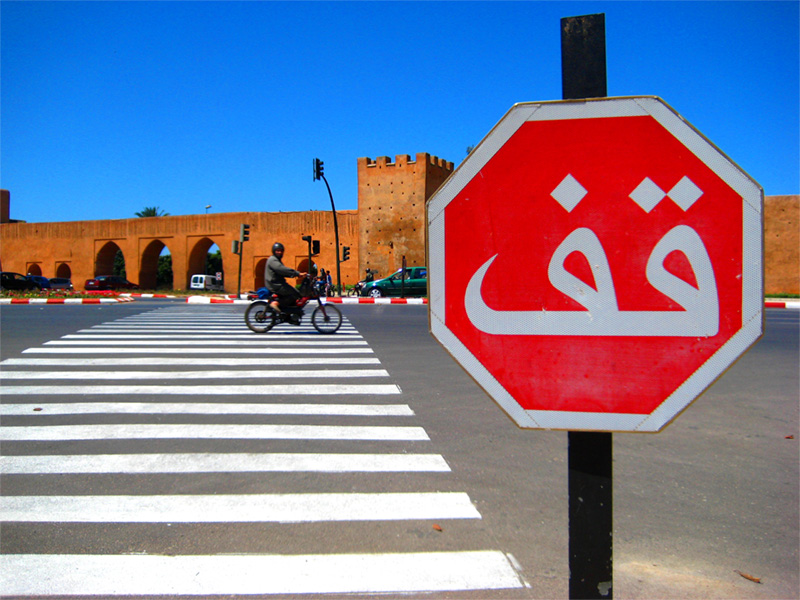
Perhaps you wonder what it is that a M.A. Theology student spends so much money to learn. Well I thought I would share with you some of the tools in Biblical Interpretation that a true scholar like me learns. To do this, let us talks about how you exegete a Stop sign.
Suppose you're traveling to work and you see a stop sign. What do you do? That depends on how you exegete the stop sign.
1. A postmodernist deconstructs the sign (knocks it over with his car), ending forever the tyranny of the north-south traffic over the east-west traffic.
2. Similarly, a Marxist sees a stop sign as an instrument of class conflict. He concludes that the bourgeoisie use the north-south road and obstruct the progress of the workers on the east-west road.
3. A serious and educated Catholic believes that he cannot understand the stop sign apart from its interpretive community and their tradition. Observing that the interpretive community doesn't take it too seriously, he doesn't feel obligated to take it too seriously either.
4. An average Catholic (or Orthodox or Coptic or Anglican or Methodist or Presbyterian or whatever) doesn't bother to read the sign but he'll stop if the car in front of him does.
5. A fundamentalist, taking the text very literally, stops at the stop sign and waits for it to tell him to go.
6. A preacher might look up "STOP" in his lexicons of English and discover that it can mean: 1) something which prevents motion, such as a plug for a drain, or a block of wood that prevents a door from closing; 2) a location where a train or bus lets off passengers. The main point of his sermon the following Sunday on this text is: when you see a stop sign, it is a place where traffic is naturally clogged, so it is a good place to let off passengers from your car.
7. An orthodox Jew does one of two things:
1) Take another route to work that doesn't have a stop sign so that he doesn't run the risk of disobeying the Law.
2) Stop at the stop sign, say "Blessed art thou, O Lord our God, king of the universe, who hast given us thy commandment to stop," wait 3 seconds according to his watch, and then proceed.
Incidentally, the Talmud has the following comments on this passage: R[abbi] Meir says: He who does not stop shall not live long. R. Hillel says: Cursed is he who does not count to three before proceeding. R. Simon ben Yudah says: Why three? Because the Holy One, blessed be He, gave us the Law, the Prophets, and the Writings. R. ben Isaac says: Because of the three patriarchs. R. Yehuda says: Why bless the Lord at a stop sign? Because it says: "Be still, and know that I am God." R. Hezekiel says: When Jephthah returned from defeating the Ammonites, the Holy One, blessed be He, knew that a donkey would run out of the house and overtake his daughter; but Jephthah did not stop at the stop sign, and the donkey did not have time to come out. For this reason he saw his daughter first and lost her. Thus he was judged for his transgression at the stop sign. R. Gamaliel says: R. Hillel, when he was a baby, never spoke a word, though his parents tried to teach him by speaking and showing him the words on a scroll. One day his father was driving through town and did not stop at the sign. Young Hillel called out: "Stop, father!" In this way, he began reading and speaking at the same time. Thus it is written: "Out of the mouth of babes." R. ben Jacob says: Where did the stop sign come from? Out of the sky, for it is written: "Forever, O Lord, your word is fixed in the heavens." R. ben Nathan says: When were stop signs created? On the fourth day, for it is written: "let them serve as signs." R. Yeshuah says: ... [continues for three more pages]
8. A Pharisee does the same thing as an orthodox Jew, except that he waits 10 seconds instead of 3. He also replaces his brake lights with 1000 watt searchlights and connects his horn so that it is activated whenever he touches the brake pedal.
9. A scholar from Jesus seminar concludes that the passage "STOP" undoubtedly was never uttered by Jesus himself, but belongs entirely to stage III of the gospel tradition, when the church was first confronted by traffic in its parking lot.
10. A NT scholar notices that there is no stop sign on Mark street but there is one on Matthew and Luke streets, and concludes that the ones on Luke and Matthew streets are both copied from a sign on a completely hypothetical street called "Q". There is an excellent 300 page discussion of speculations on the origin of these stop signs and the differences between the stop signs on Matthew and Luke street in the scholar's commentary on the passage. There is an unfortunately omission in the commentary, however; the author apparently forgot to explain what the text means.
11. An OT scholar points out that there are a number of stylistic differences between the first and second half of the passage "STOP". For example, "ST" contains no enclosed areas and 5 line endings, whereas "OP" contains two enclosed areas and only one line termination. He concludes that the author for the second part is different from the author for the first part and probably lived hundreds of years later. Later scholars determine that the second half is itself actually written by two separate authors because of similar stylistic differences between the "O" and the "P".
12. Another prominent OT scholar notes in his commentary that the stop sign would fit better into the context three streets back. (Unfortunately, he neglected to explain why in his commentary.) Clearly it was moved to its present location by a later redactor. He thus exegetes the intersection as though the stop sign were not there.
13. Because of the difficulties in interpretation, another OT scholar emends the text, changing "T" to "H". "SHOP" is much easier to understand in context than "STOP" because of the multiplicity of stores in the area. The textual corruption probably occurred because "SHOP" is so similar to "STOP" on the sign several streets back that it is a natural mistake for a scribe to make. Thus the sign should be interpreted to announce the existence of a shopping area.
14. A "prophetic" preacher notices that the square root of the sum of the numeric representations of the letters S-T-O-P (sigma-tau-omicron-pi in the Greek alphabet), multiplied by 40 (the number of testing), and divided by four (the number of the world--north, south, east, and west), equals 666. Therefore, he concludes that stop signs are the dreaded "mark of the beast," a harbinger of divine judgment upon the world, and must be avoided at all costs.
And that my readers is how it is done. :)
Thanks to Tim Geddert for introducing me and Tim Perry for this http://www.calvin.edu/~lhaarsma/hermeneutics_humor.html
Suppose you're traveling to work and you see a stop sign. What do you do? That depends on how you exegete the stop sign.
1. A postmodernist deconstructs the sign (knocks it over with his car), ending forever the tyranny of the north-south traffic over the east-west traffic.
2. Similarly, a Marxist sees a stop sign as an instrument of class conflict. He concludes that the bourgeoisie use the north-south road and obstruct the progress of the workers on the east-west road.
3. A serious and educated Catholic believes that he cannot understand the stop sign apart from its interpretive community and their tradition. Observing that the interpretive community doesn't take it too seriously, he doesn't feel obligated to take it too seriously either.
4. An average Catholic (or Orthodox or Coptic or Anglican or Methodist or Presbyterian or whatever) doesn't bother to read the sign but he'll stop if the car in front of him does.
5. A fundamentalist, taking the text very literally, stops at the stop sign and waits for it to tell him to go.
6. A preacher might look up "STOP" in his lexicons of English and discover that it can mean: 1) something which prevents motion, such as a plug for a drain, or a block of wood that prevents a door from closing; 2) a location where a train or bus lets off passengers. The main point of his sermon the following Sunday on this text is: when you see a stop sign, it is a place where traffic is naturally clogged, so it is a good place to let off passengers from your car.
7. An orthodox Jew does one of two things:
1) Take another route to work that doesn't have a stop sign so that he doesn't run the risk of disobeying the Law.
2) Stop at the stop sign, say "Blessed art thou, O Lord our God, king of the universe, who hast given us thy commandment to stop," wait 3 seconds according to his watch, and then proceed.
Incidentally, the Talmud has the following comments on this passage: R[abbi] Meir says: He who does not stop shall not live long. R. Hillel says: Cursed is he who does not count to three before proceeding. R. Simon ben Yudah says: Why three? Because the Holy One, blessed be He, gave us the Law, the Prophets, and the Writings. R. ben Isaac says: Because of the three patriarchs. R. Yehuda says: Why bless the Lord at a stop sign? Because it says: "Be still, and know that I am God." R. Hezekiel says: When Jephthah returned from defeating the Ammonites, the Holy One, blessed be He, knew that a donkey would run out of the house and overtake his daughter; but Jephthah did not stop at the stop sign, and the donkey did not have time to come out. For this reason he saw his daughter first and lost her. Thus he was judged for his transgression at the stop sign. R. Gamaliel says: R. Hillel, when he was a baby, never spoke a word, though his parents tried to teach him by speaking and showing him the words on a scroll. One day his father was driving through town and did not stop at the sign. Young Hillel called out: "Stop, father!" In this way, he began reading and speaking at the same time. Thus it is written: "Out of the mouth of babes." R. ben Jacob says: Where did the stop sign come from? Out of the sky, for it is written: "Forever, O Lord, your word is fixed in the heavens." R. ben Nathan says: When were stop signs created? On the fourth day, for it is written: "let them serve as signs." R. Yeshuah says: ... [continues for three more pages]
8. A Pharisee does the same thing as an orthodox Jew, except that he waits 10 seconds instead of 3. He also replaces his brake lights with 1000 watt searchlights and connects his horn so that it is activated whenever he touches the brake pedal.
9. A scholar from Jesus seminar concludes that the passage "STOP" undoubtedly was never uttered by Jesus himself, but belongs entirely to stage III of the gospel tradition, when the church was first confronted by traffic in its parking lot.
10. A NT scholar notices that there is no stop sign on Mark street but there is one on Matthew and Luke streets, and concludes that the ones on Luke and Matthew streets are both copied from a sign on a completely hypothetical street called "Q". There is an excellent 300 page discussion of speculations on the origin of these stop signs and the differences between the stop signs on Matthew and Luke street in the scholar's commentary on the passage. There is an unfortunately omission in the commentary, however; the author apparently forgot to explain what the text means.
11. An OT scholar points out that there are a number of stylistic differences between the first and second half of the passage "STOP". For example, "ST" contains no enclosed areas and 5 line endings, whereas "OP" contains two enclosed areas and only one line termination. He concludes that the author for the second part is different from the author for the first part and probably lived hundreds of years later. Later scholars determine that the second half is itself actually written by two separate authors because of similar stylistic differences between the "O" and the "P".
12. Another prominent OT scholar notes in his commentary that the stop sign would fit better into the context three streets back. (Unfortunately, he neglected to explain why in his commentary.) Clearly it was moved to its present location by a later redactor. He thus exegetes the intersection as though the stop sign were not there.
13. Because of the difficulties in interpretation, another OT scholar emends the text, changing "T" to "H". "SHOP" is much easier to understand in context than "STOP" because of the multiplicity of stores in the area. The textual corruption probably occurred because "SHOP" is so similar to "STOP" on the sign several streets back that it is a natural mistake for a scribe to make. Thus the sign should be interpreted to announce the existence of a shopping area.
14. A "prophetic" preacher notices that the square root of the sum of the numeric representations of the letters S-T-O-P (sigma-tau-omicron-pi in the Greek alphabet), multiplied by 40 (the number of testing), and divided by four (the number of the world--north, south, east, and west), equals 666. Therefore, he concludes that stop signs are the dreaded "mark of the beast," a harbinger of divine judgment upon the world, and must be avoided at all costs.
And that my readers is how it is done. :)
Thanks to Tim Geddert for introducing me and Tim Perry for this http://www.calvin.edu/~lhaarsma/hermeneutics_humor.html
Wednesday, March 03, 2010
Love Your Enemies
WARNING: This is a long post, but I don't have time to write something shorter. I'm pretty busy here with family, but I wanted to post something since it's been a while. This is a short sermon that I had to write for my Discipleship and Ethics class. I think it's worth reading if you have a bit of time.
Not long before this scene, Jesus was sharing a meal with his disciples. John sets the stage with heavy foreshadowing as he writes that the devil has already worked his way into Judas’ heart and that Judas has already made the decision to betray Christ (John 13:2). Jesus, fully aware of what Judas is planning (John 13:21, 26), gets up from the table and takes on the posture of a servant. In a humble act of service Jesus washes the feet of His disciples. The important point is that Jesus washes all of the disciples feet, even the dirty feet of the one who, in a few hours, will walk down a dusty road to betray him.
Sometimes it is hard for us to know what we mean when we talk about loving our enemies. Is it the nation my nation is at war with? While there is no doubt that we should seek peace and we certainly need to express love towards those people, they are often an abstract concept for us. What is not abstract for us are those who have betrayed us. We can all remember the promises that have been broken, and the lies that have been told. There is nothing abstract about the pain we feel when we have been betrayed, and we have all been betrayed. Many of us have had friends who are no longer our friends because of real or perceived betrayals. Our closest friends can become our enemies when hurt is left unchecked. When bitterness, anger, and revenge are allowed to fester in our minds, even those we are close to can become our enemies. It has happened to me. I have lost friends because I have not lived a life of forgiveness. Has it happened to you? When the Pharisees asked Jesus what the most important law was, he replied that it was to love God and your neighbor, that this was the whole law. To illustrate the neighbor, Jesus picks a Samaritan, a despised, heretical enemy of the Jews. This is what it means to love your neighbor. It means to love your enemy as well as your friend; that is the law.
In his own life, Jesus saw those close to him betray him and become his enemy. For Peter, the betrayal was not the end. Rather Jesus sought out the one who had betrayed him and extended his love. One can only think that if Judas had been able to fight his demons for just three days, Christ also would have extended love, forgiveness, and a second chance to him as well. What a beautiful scene this would have been, to see Jesus walk across the field and kiss Judas on the cheek and to hear the words, “Judas, I love you. You are forgiven.”
Brothers and sisters, Jesus is not just an example of how to love our enemies, our betrayers. No, in the actions of Christ we can see the actions of God for us. In the person of Jesus, God has taken on the form of the lowest servant. Jesus came to serve, not to be served. G.K. Chesterton writes, “There has fallen to earth for a token, a God to great for the sky” (G.K. Chesterton, Gloria in Profundis). God is the mighty one. The one who is too great for this world to contain. God the creator, has come to earth for us, a token. God’s heart was betrayed by Adam and Eve in the Garden. God has been betrayed countless times since by us. Yet still God comes hurtling towards us. God’s grace, mercy, and love are like a volcano that explodes forth with unstoppable power and force. Nothing can stand in front of this torrent. We are engulfed and carried away in God’s love. God comes not with judgement or anger, but with a question, do you love me? Romans 5:8-11 says,
“For while we were still weak, at the right time Christ died for the ungodly. In deed, rarely
will anyone die for a righteous person - although perhaps for a good person someone might actually dare to die. But God proves his love for us in that while we still were sinners Christ died for us. Much more surely then, now that we have been justified by his blood, will we be saved through him from the wrath of God. For if while we were enemies, we were reconciled to God through the death of his Son, much more surely, having been reconciled, will we be saved by his life. But more than that, we even boast in God through our Lord Jesus Christ, through whom we have now received reconciliation.” This verse reminds us that we have been the enemy of God. We have stood in combat with God and we have fought against our rightful Lord. However, our rebellion, betrayal, enmity, will never be enough to dissuade God from loving us and creating a way to be brought into God’s family. God’s most earnest desire is that you be reconciled; brought into the family of God through Jesus Christ. God is love, and God’s love for each of us is such that God will not allow us to remain his enemies. God’s love overcomes the barriers that hold us apart. Forgiveness is extended, adoption into the family of God is offered. Betrayals are set aside and Jesus walks towards us, kisses us on the cheek, and says, “I love you. You are forgiven.”
It is with this, the deluge of God’s love, in the forefront of our minds that we return to Jesus’ command to love God, and to love your neighbor, even your neighbor is an enemy. Any action of love that we make towards those who have hurt us, betrayed us, will only flow out of the love we experience from Christ. Only as we experience the resurrection power of love and forgiveness will we find the ability to also love our enemies. When we learn to love our enemies, we will find that our world is opened; we are freed from our grudges and hateful burdens. Life is better lived when we are at peace with our neighbor. I also believe that in learning to love our enemy, we will also learn to love God more. We love our enemies by learning to forgive as God has forgiven us. We can learn to forgive by releasing our bitterness, anger, and grudges. It can seem like an impossible task to love our enemy. How can I forgive someone who has hurt me so deeply, but we never learn to love our enemies alone. None of us walk this path alone. Rather, we are the reconciled community of Christ. We experience the power and support of others as we learn to love our enemies. As a justified community of love, we practice what it means to forgive, to extend grace, to live in peace, to disagree without breaking fellowship, and to be patient. Learning these virtues with our brothers and sisters will better enable us to live a life of loving our enemies, betrayers, and neighbors wherever we are. We seek to live lives that obey the command to love our neighbors and our enemies. And when we fail, we acknowledge that God’s kingdom has not yet been fully established on earth and we pray with Jesus, “Your kingdom come” (Matt 6:10).
So may we be grasped once again by the amazing story of how God moves towards those who have betrayed him. May we be moved by the great God who, in grace and love, rushes to embrace those who have warred against him. May we recognize our own betrayal of God and reach out to hear God say, “I love you. You are forgiven.” And then, in turn, may we reach out to our own enemies and betrayers and pass on the words that we have heard. “I love you. You are forgiven.”
Wednesday, February 24, 2010
That Was a First
I had this really odd experience this morning. It was about 5 Am and for some reason I woke myself up laughing. I had this hilarious dream (which I sadly can't remember anymore) and I just couldn't stop laughing. I can honestly say that has never happened to me before. I wish I could say the rest of my day was that good, but... well it wasn't a bad day, just not as funny as my dream.
Has this ever happened to anyone else? What was your funniest dream?
Monday, February 22, 2010
Community
I had this sort of "ah ha!" moment last night reading Brueggemann. He was writing about the challenges of Biblical Interpretation in an increasingly pluralistic society, and in a post-modern world where, "a perspective has the power to makes sense out of the rawness of experienced life, even though it cannot be 'proven' or absolutely established" (Texts under Negotiation p. 10).
So I am reading this and I come to his line, "In Christian faith, the specific form faith takes is of a certain ilk, practiced from a certain perspective that one embraces in the face of other, rival perspectives.... This posture does not claim to be objectively true, but it claims to be a position where one will stand at cost and at risk, so that in the end, the test of its validity is non longer logic or fact, but the expenditure of one's own life, which is the only thing that has final worth" (p. 10)
My first thought as I read this was, "This is why the witness of thebeliever Believing Community is so important." Yes folks, I caught myself half way through the word believer, and realized that it is not about how well I live out the Christian life on my own. It is all about how I live out my Christian walk in community. I really can't think of a more Anabaptist thought. For me this marks a bit of a change. Not that I haven't thought that community is important, but as I read more and more I am being reminded that when the Bible says "you" it usually means the church, not the individual.
So I am reading this and I come to his line, "In Christian faith, the specific form faith takes is of a certain ilk, practiced from a certain perspective that one embraces in the face of other, rival perspectives.... This posture does not claim to be objectively true, but it claims to be a position where one will stand at cost and at risk, so that in the end, the test of its validity is non longer logic or fact, but the expenditure of one's own life, which is the only thing that has final worth" (p. 10)
My first thought as I read this was, "This is why the witness of the
Saturday, February 20, 2010
Wishing
I want to go snowboarding. Watching the Olympics hasn't helped. Even if I can't pull a Double McTwist 1260... or even make it down the hill without snowplowing the whole way, I am still inspired by it. I want to go down a mountain on my board. The worst thing is we are actually pretty close to some really good mountains. However, due to space we left all our boards and boots in storage, and we just don't have the money for lift tickets and rentals. *Sigh* So instead I will just look at these pictures of what Niki and I could be doing instead of homework.
Beer Butt Chicken
So today I made supper on the BBQ. When I was working at Cargill the guys all talked about how this is the absolute best way to have chicken. So I bought a Foster fresh chicken and turned on the BBQ. I have to say, it was the best chicken that I have ever had. The skin is crisp and tasty, and the meat is incredibly juicy and moist. So if you are interested here's how to do it.
1) Get a can of beer, or in my case I used a Pepsi can and just filled it half way. (the other day I found some Molson Canadian in the store so I used that. I've heard that you can also use Pepsi... and a Dr. Pepper could be really good as well)
2) Use a can opener and cut off the top of the can.
3) Make a nice dry rub. Today I used some brown sugar, garlic powder, chili powder, oregano, parsley, Montreal steak spice. I mixed it all together and then put a few scoops in with the beer in the can. Use the rest to rub on the chicken. It is also important to remember that the skin won't let a lot of flavor through so you have to rub it in between the skin so it is right on the meat. It is messy but pretty fun. Once you have done that, sit the chicken down on top of the can.
4) Preheat the BBQ to about 300 place the chicken down on a pan and start cooking with indirect heat. Today it took me just over an hour until it was done.
This is what it looked like when I was done. It was INCREDIBLE!!!!
You can see the can inside of the meat. It was so much fun to come out and look and see how it was bubbling and sizzling. I highly recommend this as a new way to cook your chicken.
1) Get a can of beer, or in my case I used a Pepsi can and just filled it half way. (the other day I found some Molson Canadian in the store so I used that. I've heard that you can also use Pepsi... and a Dr. Pepper could be really good as well)
2) Use a can opener and cut off the top of the can.
3) Make a nice dry rub. Today I used some brown sugar, garlic powder, chili powder, oregano, parsley, Montreal steak spice. I mixed it all together and then put a few scoops in with the beer in the can. Use the rest to rub on the chicken. It is also important to remember that the skin won't let a lot of flavor through so you have to rub it in between the skin so it is right on the meat. It is messy but pretty fun. Once you have done that, sit the chicken down on top of the can.
4) Preheat the BBQ to about 300 place the chicken down on a pan and start cooking with indirect heat. Today it took me just over an hour until it was done.
This is what it looked like when I was done. It was INCREDIBLE!!!! You can see the can inside of the meat. It was so much fun to come out and look and see how it was bubbling and sizzling. I highly recommend this as a new way to cook your chicken.
Monday, February 15, 2010
Brew, Books, Bikes
I bought a new blend today. It is a seasonally available coffee from Mexico. On the bag it says that it has a Milk chocolate and Hazelnut. I am very excited to make myself a pot tomorrow morning. Today was a great homework day. I finished reading The Art of Reading Scripture - by Davis and Hays and All Right Now by Tim Geddert. So much reading to do this semester finishing a book is always a good feeling, and two makes me feel like I am doing really well. Tomorrow will be another day of work, but maybe I'll try my hand at writing something as well.
Today I also headed over to the DMV (since it was closed) and did some riding around their motorcycle test track. I'm doing a little practicing so that I can get my full license. Good times, I love riding on a warm sunny day.
Tuesday, February 09, 2010
Not that I have time...
Not that I have any time for reading right now, but went to a book sale to day and found four great books that I bought... only cost my 5 bucks for them all.. There were a few more that looked interesting so I might go back for them later... but for now this is what I picked up.
The Epistle to the Philippians - Karl Barth
The Upside Down Kingdom - Donald B. Kraybill
Jesus Matters - Ed. James R. Krabill and David Shenk
Christ and Culture - Richard Niebuhr
The Epistle to the Philippians - Karl Barth
The Upside Down Kingdom - Donald B. Kraybill
Jesus Matters - Ed. James R. Krabill and David Shenk
Christ and Culture - Richard Niebuhr
Sunday, February 07, 2010
Oh Canada!
The other day in my North American Religious History class we were discussing the differences between Canada and the United States (of which there are many). As the sole Canadian in the class I thought that the best way to explain the differences was like this...
Thursday, February 04, 2010
February
February! Did you know that February means spring in California? It's true, the trees are budding, the flowers are starting to bloom, and the fruit trees are producing like crazy. February is a wonderful month to be living down south. February is also a great sports month. First there is the Superbowl which means a great party with friends, and the night before the Superbowl is the start of Nascar season. Also this year the Olympics are on this year, although with all my homework I am just hoping to catch a few of the hockey games, and maybe some snowboarding.
February is also Valentines, so gentlemen... you've been warned. The question is how much to do? Niki and I are going to stay pretty low key. One of the results of struggling with infertility as a couple is that it makes Mother's day incredibly difficult. As a result we are more aware of the pain that some of these holidays can cause on those who don't have a special someone in their life. So I'll probably try and do something for Niki, but nothing to big. May 14th... that's the day to go big!
Thursday, January 28, 2010
Tuesday, January 26, 2010
How American Idol Brings Out My Worst
Sadly I am watching American Idol... Nothing else on, and I'm not really feeling the Church History this evening. Anyway I am watching the people who have been rejected walk out crying and all I can think is that if I could have any job on American Idol I would want to be the camera guy who follows them out and sticks the camera in their face and follows them out as they cry. I know, it's cruel. But seriously I think that would be one of the funniest jobs on the show. Honestly though, I can't believe that I am watching this show. I really hate it. Too commercial, too specific, and there is no room for original singers. People like Neil Young, Bob Dylan, Dave Matthews, and George Young (AC/DC) would definitely never have made it past the auditions. And I think there would be some question if Gordon Downie (The Tragically Hip) would have made it. However, all of these men are incredible singer songwriters who deserve all the fame they have earned. Finally, if we need any more proof that American Idol is totally fake and stupid. Katy Perry was a guest judge????? Didn't she sing on AI last year? If I remember correctly I she was brutal (*sigh*)
Monday, January 25, 2010
First Day of Class
So today is the first day of class for the semester! I have just 1.75 hours left of freedom! In just under two hours I will receive my first (of many) Syllabus. Of course since I've had almost two months off, I have done some reading and I am sitting in a pretty good place for the start of the semester. And I am actually pretty ready to get back in the class room. Sitting around is nice, but it will be good to be busy again. However, I can tell already that Monday's are not going to be my favorite day of the week. Class all afternoon, just enough time to work out and grab a quick something to eat, and then class until 9, and then work for an hour or so cleaning the school.
Fortunately I was able to finish reading all the books I bought from Amazon with my Christmas money. I had to read pretty fast the last two days to finish Miroslav Volf's Free of Charge, but I finished it this morning and now I am ready to just read school books for a while. Free of Charge was excellent. Because pretty much everything I read I relate to the subject of God's wrath, there were a few things that I wonder about. However, if you are looking for an excellent book on the topic of giving and forgiveness this is a must read. In church on Sunday they were talking about giving money and that sort of thing, and I kept wishing that the person preaching would have read this book. It would have offered so much to his sermon. Anyway that's all for now. Peace
Friday, January 22, 2010
The Wrath of God
So I spent a good portion of today in the in the Library doing research for my Thesis. I read a number of different books and authors on the subject of the wrath of God. I found some stuff that I found really helpful. Also some stuff that I thought was totally bizarre. Did you know that Martin Luther was obsessed with his personal guilt? There is one account of him spending six hours confessing all his sins from the previous day. He was so consumed with personal guilt and fear of God that it affected everything he did. As I have studied the wrath of God I feel that it is very important that this issue be addressed. There is still too much of Luther's fear and Marcion's belief that God of the Old Testament was different than the God of the New. All in all it seems that is we are going to speak of God's wrath it cannot be divorced from the person of Jesus. Right now I am thinking that my Thesis will combine the issue of wrath of God expressed in the person of Jesus, and how to reconcile our call to be nonviolent with the violent images of Jesus the lamb in Revelation... or something like that. I'll need to figure out exactly how this will work. I have a few ideas, but it needs to be fleshed out a little better. So to sum up, Thesis will combine non-violence, Jesus, wrath, violence....... my head hurts.
Anyway I did do some reading by Heschel from the book Prophets it is incredible! Here are a few great quotes about God's wrath from him.
“To the prophets, we have noted, God does not reveal himself in an abstract absoluteness, but in a personal and intimate relation to the world. He does not simply command and expect obedience; He is also moved and affected by what happens in the world, and reacts accordingly. Events and human actions arouse in Him joy or sorrow, pleasure or wrath. He is not conceived as judging the world in detachment” (223/224)
“God’s pathos was not thought of as a sort of fever of the mind, which disregarding the standers of justice, culminates in irrational and irresponsible action. There is justice in all His ways, the Bible insists again and again.” (225)
“Whatever man does affects not only his own life, but also the life of God insofar as it is directed to man. The import of man raises him beyond the level of mere creature. He is a consort, a partner, a factor in the life of God. (226)
“As long as the anger of God is viewed in the light of psychology of passions rather than in the light of the theology of pathos, no adequate understanding will be possible. (282)
“There is an evil which most of us condone and are even guilty of: Indifference to evil... All prophecy is one great exclamation; God is not indifferent to evil! ... This is one meaning of the anger of God: the end of indifference!” (284)
It is impossible to understand the meaning of divine anger without pondering the meaning of divine patience or forbearance. Explicitly and implicitly, the prophets stress that God is patient, long-suffering, or slow to anger (ex 34:6, Num 14:18, Jer 15:15, Joel 2:13, Jonah 4:2, Nah 1:3, Pss 86:15, 103:8 145:8 Neh 9:17). Patience is one of the ‘thirteen attributes of God,’ yet never in the sense of apathy, of being indifferent. Contrary to their thinking was the idea of a God who submits to the caprice of man, smiling at the hideousness of evil. The patience of God means His restraint of justifiable anger. One must not mistake divine forgiveness for indulgence or complacency. There is a limit at which forbearance ceases to be a blessing.... The Lord is long-suffering, compassionate, loving and faithful, but He is also demanding, insistent, terrible, and dangerous.” (p 285)
“The call of anger is a call to cancel anger. it is not an expression of irrational, sudden, and instinctive excitement, but a free and deliberate reaction of God’s justice to what is wrong and evil. For all its intensity, it may be averted by prayer (Deut 9:19, Ex 32:7-11). There is no anger for anger’s sake.” (286)
Anyway I did do some reading by Heschel from the book Prophets it is incredible! Here are a few great quotes about God's wrath from him.
“God’s pathos was not thought of as a sort of fever of the mind, which disregarding the standers of justice, culminates in irrational and irresponsible action. There is justice in all His ways, the Bible insists again and again.” (225)
“Whatever man does affects not only his own life, but also the life of God insofar as it is directed to man. The import of man raises him beyond the level of mere creature. He is a consort, a partner, a factor in the life of God. (226)
“As long as the anger of God is viewed in the light of psychology of passions rather than in the light of the theology of pathos, no adequate understanding will be possible. (282)
“There is an evil which most of us condone and are even guilty of: Indifference to evil... All prophecy is one great exclamation; God is not indifferent to evil! ... This is one meaning of the anger of God: the end of indifference!” (284)
It is impossible to understand the meaning of divine anger without pondering the meaning of divine patience or forbearance. Explicitly and implicitly, the prophets stress that God is patient, long-suffering, or slow to anger (ex 34:6, Num 14:18, Jer 15:15, Joel 2:13, Jonah 4:2, Nah 1:3, Pss 86:15, 103:8 145:8 Neh 9:17). Patience is one of the ‘thirteen attributes of God,’ yet never in the sense of apathy, of being indifferent. Contrary to their thinking was the idea of a God who submits to the caprice of man, smiling at the hideousness of evil. The patience of God means His restraint of justifiable anger. One must not mistake divine forgiveness for indulgence or complacency. There is a limit at which forbearance ceases to be a blessing.... The Lord is long-suffering, compassionate, loving and faithful, but He is also demanding, insistent, terrible, and dangerous.” (p 285)
“The call of anger is a call to cancel anger. it is not an expression of irrational, sudden, and instinctive excitement, but a free and deliberate reaction of God’s justice to what is wrong and evil. For all its intensity, it may be averted by prayer (Deut 9:19, Ex 32:7-11). There is no anger for anger’s sake.” (286)
Wednesday, January 20, 2010
The Voice
The Text boxes in the Bible I had no use for. I found they added very little insight or help. On the other hand in this Bible there are many italicized portions where the translators have added text to try and more fully capture the original meaning of the text, or give us some insight that would have been obvious to the original audience.
When I read Colossians I was a little disappointed with The Voice. I felt that some of that some of the italicized portions were adding more of the translators own views than Paul’s. I also thought that language of an NLT or The Message would be easier to read and understand.
However, I then read Galatians and 1 Corinthians and there I really fell in love with The Voice.
Recently there has been debate within Scholarship about how to translate “dia pisteos Isou Cristou” in Galatians 2:16. The question here being, are we made righteous by faith in Jesus or by the faith of Jesus. For various reasons I find the later position more compelling and I was excited to see that the translators of The Voice agreed with me. I think that they also did a great job of getting the feel of Galatians.
I have also just finished reading Richard Hays’ commentary on 1 Corinthians and I found that for the most part The Voice really echoed Hays’ commentary. I think that they did a good job of capturing Paul’s meaning in this book. They really captured the sense of community and moved away from an individualistic reading of Corinthians.
For the most part I really enjoyed The Voice. I was occasionally disappointed because I felt that the translators stuck with a more traditional interpretation on some passages (Like 1 Cor 11) but was pleased with the way they pushed on other passages. If you read The Voice beside a literal translation of the Bible you may wonder if you are even reading the same book. Some of the additions do add a lot to what we traditionally have read. The best advice I can give is to read The Voice alongside a good commentary. This will help you decide for yourself how the translators have done. All in all The Voice is a good devotional book, something to give you some fresh insights into the scriptures, but not a book I would ever take into one of my seminary classes.
Monday, January 18, 2010
Sunday, January 17, 2010
Yosemite Pictures
We had the chance to go and see Yosemite this weekend. It was so beautiful. Here are a few pictures from our trip.
Saturday, January 16, 2010
She Says She Loves Her Life
Niki always tells me that she loves her life with me. So I thought that I would show you what that life looks like. Here is a normal day in our house! Reading, internet, homework!
And yes that is Karl Barth Church Dogmatics IV.1 on the shelf.
Subscribe to:
Posts (Atom)